

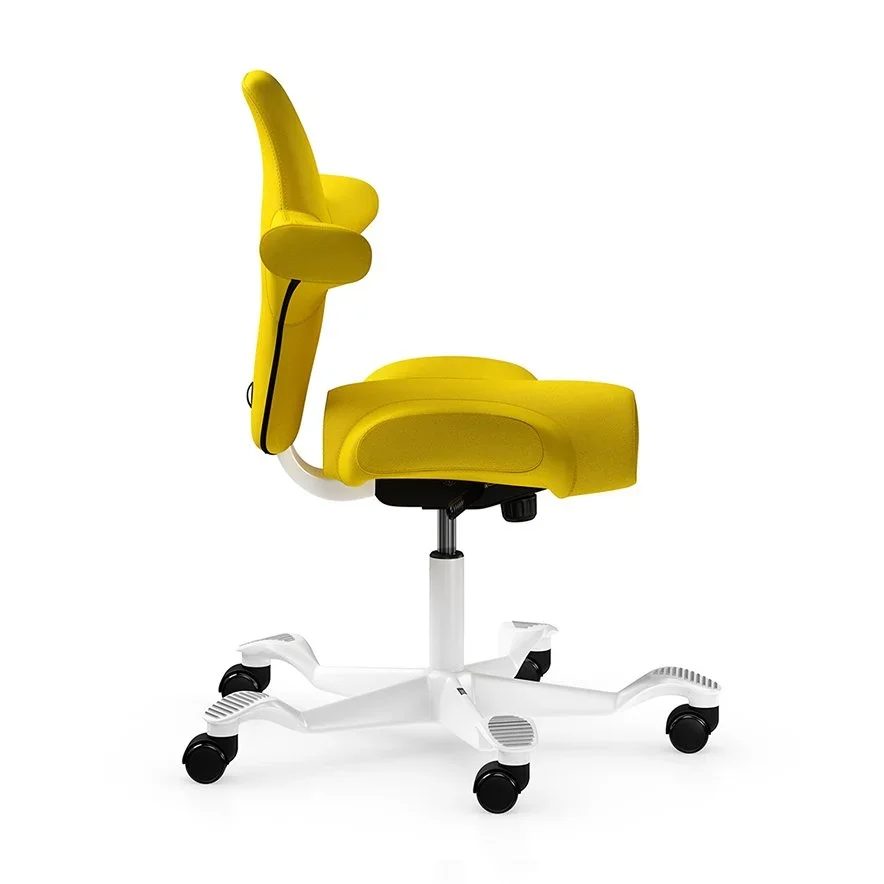
HÅG Capisco by 9to5 Seating. See HÅG Capisco at Contract Office Reps
If you're selecting a dealer for an office, school or healthcare project, the sales presentations are about to look more impressive than ever. Renderings will be faster, options more numerous, and visual packages more polished. That's genuinely useful — and it's also the easiest part of the job to fake.
Here's what to look at instead, and where the new tools do and don't help you.
Visualization is a real advantage — up to a point
A dealer who can show your stakeholder group the actual space with the actual furniture, and iterate on it the same week, removes weeks of decision paralysis. That matters most when several people have to agree, or when a fixed opening date can't absorb multiple revision cycles that each add two weeks.
But the limits are well documented. AI tools are useful for testing layout configurations early, and they don't account for building codes, cabling or accessibility requirements. A beautiful rendering tells you nothing about whether the plan is buildable.
So the question to ask isn't "can you show me a rendering?" It's "who on your team checks that rendering against code, power and data?"
The questions worth asking
Who specified it, and what's their credential? Ask whether the person writing your specification has ergonomic or code-related certification, and how many projects of your type they've completed. Product knowledge that prevents a bad selection is worth more than any visualization tool.
What happens when the factory misses a date? Every project has a problem. What differs is whether your dealer has enough standing with the manufacturer to get it fixed. Ask for a specific example from the last year.
How is the quote built? Ask to see how discounts, freight and any tariff or surcharge lines are presented. A quote you can read is a dealer you can audit later. Automated quoting tools are increasingly standard in the industry, which makes accuracy less impressive on its own — transparency is the differentiator.
Who is on site at install? The gap between a good project and a bad one is frequently just whether someone from the dealer shows up during installation.
What's the warranty process in practice? Not the published terms — the actual sequence of what happens when a chair fails in month fourteen.
The underlying point
Automation is compressing the parts of dealer work that were always administrative: data entry, product matching, pricing validation. That's good. It also means the visible output of two dealers may look nearly identical while the substance behind them differs enormously.
Judge on the things software can't produce — specification judgment, factory relationships, and whether anyone answers the phone in month fourteen.
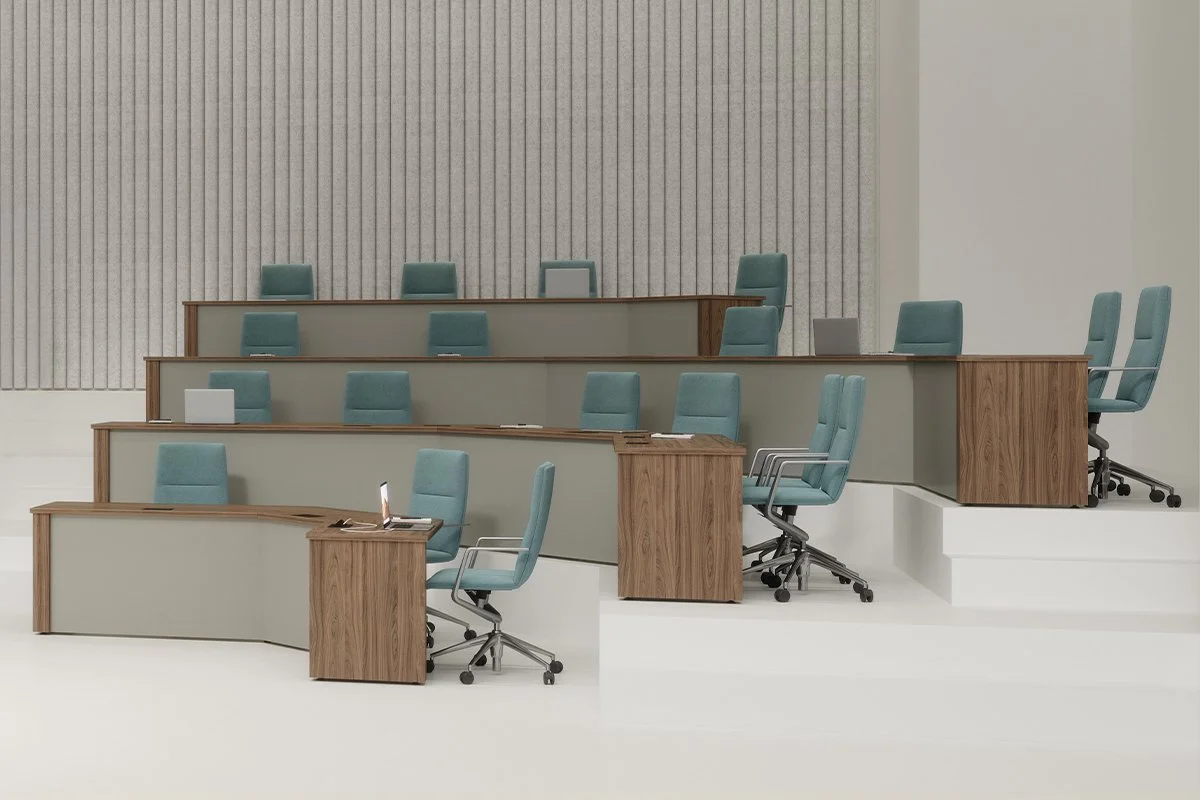
Nevers auditorium tables for higher education. Photo: Nevers
Products in this post
Ergonomic seating is where specification judgment shows up first. The HÅG Capisco, available in North America through 9to5 Seating, is built to work at different heights, from a standard desk to a standing desk. A good dealer will ask how your people actually sit before recommending it. Details are on HÅG's Capisco page, and our 9to5 Seating page covers the rest of the line.
School and campus projects add durability and scheduling pressure. Nevers higher education furniture covers presentation, conference and auditorium tables for campus spaces. See the range on Nevers' higher education page or on our Nevers page.
Working on a project in Southern California? Request a quote or contact Contract Office Reps.
Sources