

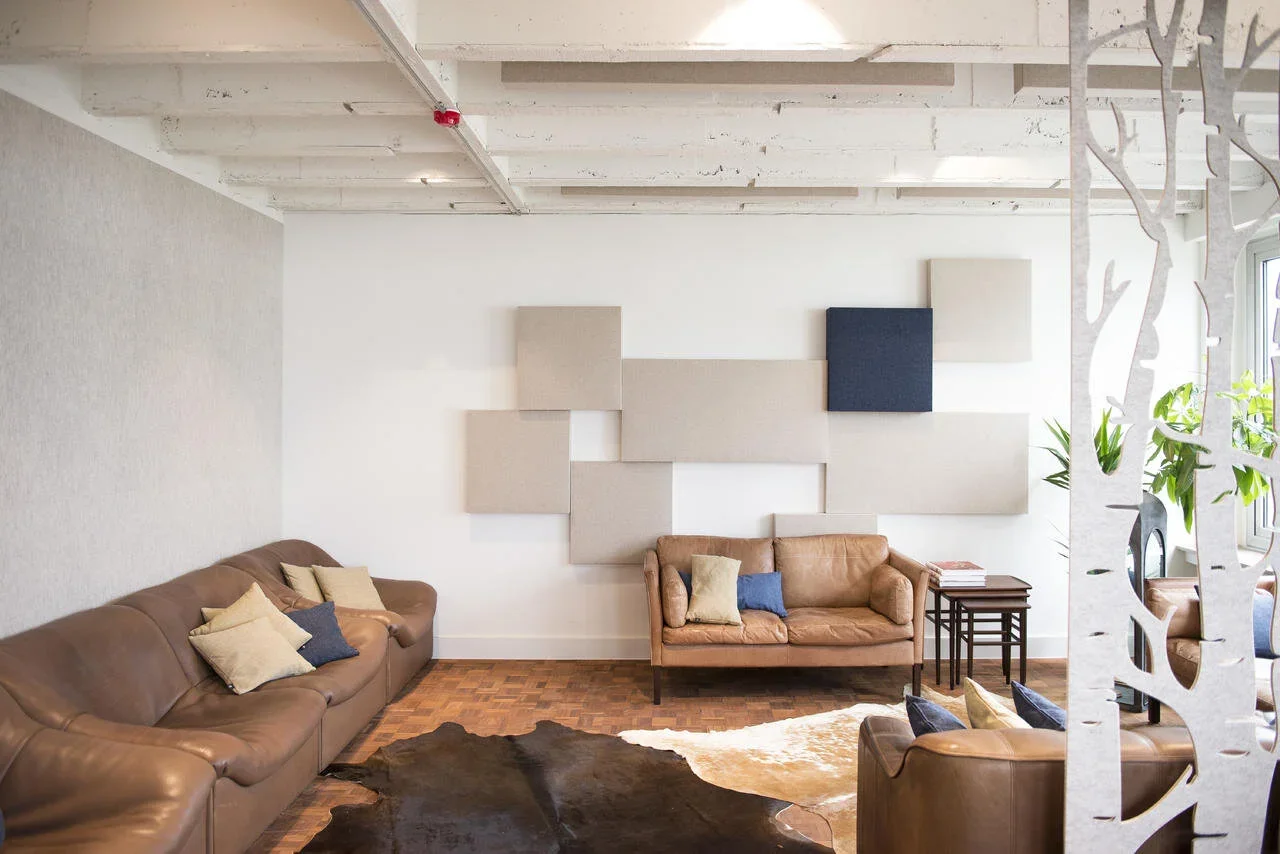
BuzziSpace BuzziBlox acoustic panels. See BuzziBlox at Contract Office Reps
More than half of individual architecture practitioners are experimenting with AI, and roughly a third of larger firms say it has already measurably sped up their design process. Those figures come from the AIA's Architect's Journey to Specification research, and they should reframe how reps and dealers think about the A&D relationship.
The important detail is not that designers are using AI. It's where they're using it.
The adoption is upstream, not in product selection
Among architects who report using AI, the most common applications are chatbots for proposal writing, image generators for concept exploration, and grammar or text analytics tools. That is the front end of a project: pursuit, narrative, early concept imagery, client-facing language.
Notice what isn't on that list. Product selection. Specification writing. Manufacturer comparison. The parts of the process where a rep earns their keep are, so far, largely untouched.
What that means for how you show up
If AI is compressing the concept phase, projects reach the furniture conversation faster and with more options already visualized. A designer who spent two weeks developing three concepts may now arrive with six, generated in an afternoon, and a client who has already fallen for one of them.
That shifts the rep's value in two directions. First, speed of response matters more, because the window between concept approval and specification is narrower than it used to be. Second, the questions that AI cannot answer well — lead times, finish availability, what actually holds up in a K–12 environment, which factory will support a tight install date — become the whole of your contribution.
The practical read
Don't sell against AI in the design studio. It is making your customers faster, which is good for everyone downstream. Instead, audit your own turnaround. If a firm can produce a concept package in a day and you need a week to return budget pricing, you are now the slow part of the process.
Also worth noting from the same research: the firms getting real value are not the ones buying the most subscriptions. They tend to designate one person to test a tool on a live project for a couple of weeks, then report back. That is a sensible model for a rep group too.
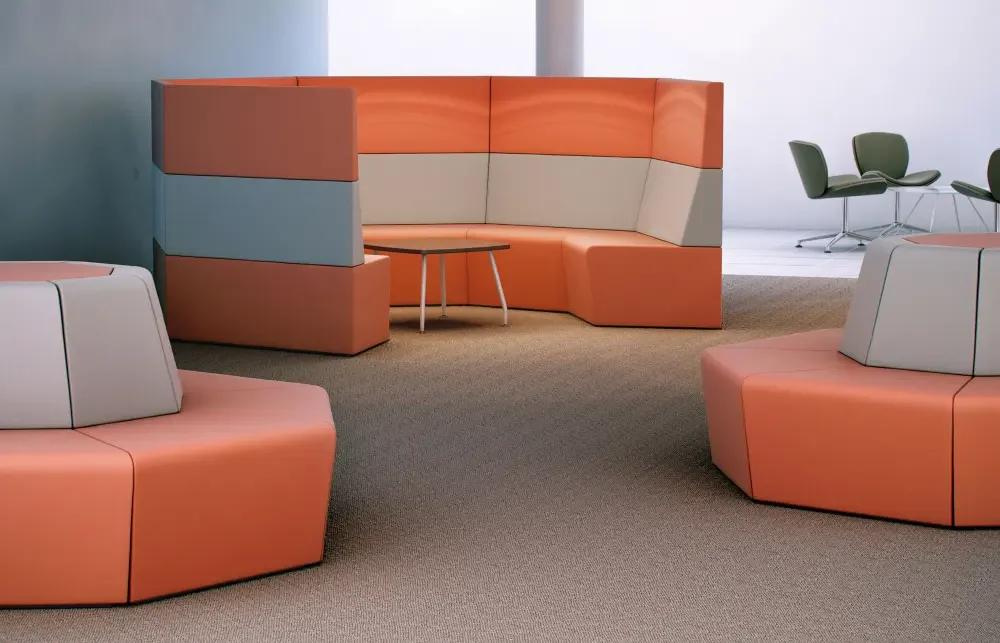
Indiana Furniture Fifteen Lounge. Photo: Indiana Furniture
Products in this post
BuzziSpace BuzziBlox acoustic panels are the kind of statement piece that shows up early in concept imagery and then has to be specified for real: shapes, fabrics, mounting and acoustic performance. Configurations are on BuzziSpace's BuzziBlox page, and you can see the rest of the line on our BuzziSpace page.
Indiana Furniture Fifteen Lounge mixes freestanding and modular pieces for straight or curved layouts, exactly the kind of configuration question that arrives fast once a concept is approved. Finishes and specs are on Indiana Furniture's Fifteen Lounge page, and more of the line is on our Indiana Furniture page.
Working on a project in Southern California? Request a quote or contact Contract Office Reps.
Sources
The Rise of AI Architecture Design in 2026: Tools, Trends, and Real-World Impact — illustrarch, citing the AIA Architect's Journey to Specification report